


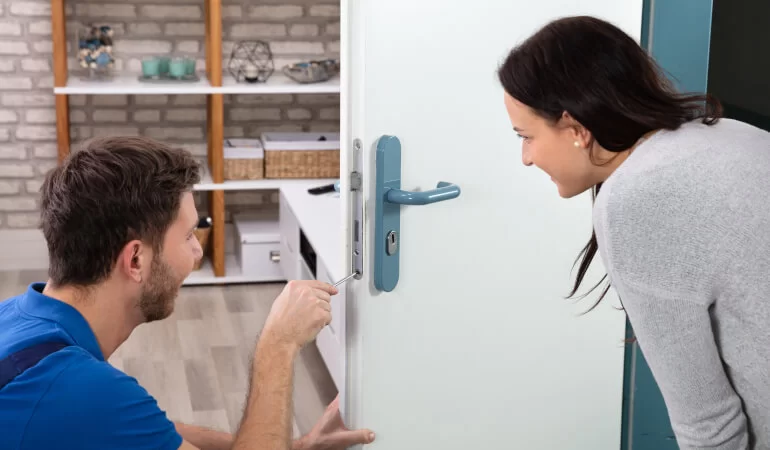
The first thing to do after moving into a new house is rekey or replace the exterior locks, because you can’t know who still has a copy of the old keys. After that, check every door and window, test your garage and any alarm system, upgrade your deadbolts and strike plates, add good lighting, and set up a simple security routine. Most of this can be done in a weekend.
Moving day is chaotic. Boxes everywhere, a fridge that won’t fit through the door, and a to-do list that grows by the hour. Home security tends to land at the bottom of that list, which is a shame, because the first few days in a new place are exactly when it matters most.
Here’s the uncomfortable truth: when you buy or rent a home, you don’t really know who has a key. Previous owners, tenants, real estate agents, contractors, cleaners, neighbors, relatives, and maybe a dog walker may all have had access at some point. You’re starting with a lock that has an unknown history.
At Keyhub Locksmith in Knoxville, TN, we help new homeowners and renters sort this out every week. This guide walks through what to do, in what order, and what’s worth spending money on.
Step 1: Rekey or Replace Your Exterior Locks (Do This First)
If you only do one thing from this article, make it this one.
Rekeying means changing the internal pins of your existing lock so the old keys no longer work and a new key does. It’s fast, affordable, and keeps your current hardware.
Replacing means installing entirely new locks. It makes sense if your current ones are worn, damaged, outdated, or low quality.
Rekey or Replace? A Simple Rule of Thumb
| Situation | Best option |
|---|---|
| Locks are in good condition and you like how they look | Rekey |
| You want all doors keyed alike (one key for everything) | Rekey |
| Locks are loose, worn, rusty, or sticking | Replace |
| You want smart or keyless entry | Replace |
| Hardware looks cheap or builder-grade and flimsy | Replace |
Don’t forget the less obvious entry points: the back door, side door, garage entry door, basement door, and any shed or detached garage. Many break-ins happen through the door people forget about.
Step 2: Check the Quality of Your Deadbolts
A lock is only as strong as its weakest part. Take a look at your deadbolts and ask:
- Is it a real deadbolt? A basic spring latch on its own is easy to defeat. Exterior doors should have a deadbolt.
- How long are the screws? Many builder-installed strike plates use short screws that only grip the thin door frame. Replacing them with 3-inch screws that reach the wall stud makes the door much harder to kick in.
- Is the strike plate solid? A heavy-duty strike plate adds real strength for very little money.
- Is the door itself solid? Hollow or damaged doors can undermine even the best lock. Solid wood, fiberglass, or steel doors are far better choices for exterior entrances.
These small upgrades are among the best value in home security, and they’re simple for a locksmith to handle quickly.
Step 3: Walk Every Door and Window
Do a full lap of your new place, inside and out, the way someone looking for a way in would.
Doors:
- Do they close and latch properly?
- Are the hinges on the inside, or can the pins be removed from outside?
- Are there glass panels near the lock that someone could break to reach through and unlock the door?
Windows:
- Do all the latches work and lock fully?
- Are there any cracked frames or loose panes?
- Are the ground-floor and basement windows secure?
Sliding doors:
- Sliding patio doors are a classic weak point. A simple wooden or metal bar in the track, plus a secondary lock, can make a big difference.
Garage:
- Check the overhead door, the entry door from the garage into the house, and any side doors.
- Reset the garage door opener code, since the previous owner may still have a remote.
Write down anything that needs fixing. A short, specific list is easier to tackle than a vague worry.
Step 4: Reset Every Code, Remote, and Login
Keys aren’t the only way into a house anymore. Think about anything that might still be linked to the previous occupants:
- Garage door opener codes and remotes
- Alarm system codes and monitoring accounts
- Smart locks, doorbells, and cameras left behind
- Wi-Fi router passwords
- Smart home hubs and apps
If the previous owner left any smart devices, factory reset them and set up your own accounts. If you can’t be sure of a device’s history, replace it. It’s a small cost compared with the peace of mind.
Step 5: Think About Lighting and Visibility
Burglars generally prefer homes where they can work unseen. You can make your house less appealing without spending much.
- Motion-activated lights near entry doors, the garage, and dark corners of the yard
- Trim bushes and trees so doors and windows aren’t hidden from the street
- Keep the porch light on or use a timer or dusk-to-dawn bulbs
- Make the house number visible, which also helps emergency responders find you quickly
Knoxville neighborhoods vary a lot, from tree-lined streets in older areas to newer subdivisions with open lots, so think about what your specific property looks like from the street at night.
Step 6: Consider a Smart Lock or Keyless Entry
Smart locks have become a popular upgrade for new homeowners, and for good reason.
What they’re good for:
- No more hunting for keys, or hiding a spare under a flowerpot
- Unique codes for family, guests, cleaners, or contractors, which you can delete anytime
- Auto-locking features if you tend to forget
- Activity logs that show when the door was used
What to keep in mind:
- Choose a reputable, well-reviewed brand
- Keep the firmware updated and use strong passwords
- Make sure the lock still has a physical key backup in case batteries die
- Have it installed properly, because a poorly aligned smart lock is a frustrating one
A good rule: smart locks add convenience, and a quality deadbolt underneath still does the heavy lifting.
Step 7: Decide on an Alarm or Camera System
Not every home needs a full security setup, but it’s worth thinking through.
Options range from:
- DIY systems: Affordable, app-based, easy to install and move
- Professionally monitored systems: Someone responds if an alarm triggers
- Video doorbells and cameras: Useful for seeing who’s at the door and keeping an eye on package deliveries
Also consider simple window and door sensors, which can be added to almost any home.
Whatever you choose, place cameras thoughtfully and respect neighbors’ privacy, and check your local rules on recording. A few well-placed devices usually beat a dozen scattered ones.
Step 8: Protect Your Valuables and Important Documents
Security isn’t only about keeping people out. It’s also about protecting what matters most if something does go wrong.
- A small fireproof, waterproof safe for passports, deeds, birth certificates, spare keys, and backup drives
- A home inventory: take photos or video of your belongings, with serial numbers for electronics, and store it in the cloud
- Check your insurance: moving is a perfect time to review your homeowners or renters policy and confirm your coverage matches your new address and belongings
Mail is another often-overlooked risk. Update your address promptly, and consider a locking mailbox if mail theft is a concern in your area.
Step 9: Get to Know the Neighborhood
Some of the best security is simply people who notice things.
- Introduce yourself to the neighbors on both sides and across the street
- Swap phone numbers so you can look out for each other
- Ask about local concerns or neighborhood groups
- Let a trusted neighbor know when you’ll be away
A friendly street where people watch out for one another is a strong deterrent, and it costs nothing.
Step 10: Build a Simple Routine
The best security setup in the world doesn’t help if the door is left unlocked. A few easy habits go a long way:
- Lock doors when you’re home, not just when you leave
- Don’t leave spare keys under mats, planters, or fake rocks (everyone knows those spots)
- Close and lock the garage, including the door into the house
- Keep ladders, tools, and bins put away so they can’t be used to reach upper windows
- Avoid posting your travel plans on social media until you’re back
Your New Home Security Checklist
Here’s a quick version to save or print:
- Rekey or replace all exterior locks
- Upgrade deadbolts and strike plates, using long screws
- Inspect all doors, windows, and the garage
- Reset garage openers, alarm codes, Wi-Fi, and smart devices
- Improve outdoor lighting and trim landscaping
- Consider a smart lock or keyless entry
- Choose an alarm, camera, or doorbell setup that fits your needs
- Store valuables and documents safely, and update your insurance
- Meet your neighbors
- Build everyday security habits
When to Call a Locksmith
You can handle some of this yourself, such as lighting, trimming, and resetting passwords. But a few jobs are better left to a professional:
- Rekeying or replacing locks so every door works smoothly with the right key
- Installing high-security deadbolts or smart locks correctly
- Reinforcing doors, frames, and strike plates
- Making keyed-alike sets so one key opens everything
- Fixing stuck, damaged, or misaligned locks
Done right, these jobs usually take less time than people expect, often within a single visit.
Frequently Asked Questions
Should I change the locks when I move into a new house?
Yes. You can’t know how many copies of the old keys exist or who has them. Rekeying or replacing the locks is a quick, affordable way to start fresh.
What’s the difference between rekeying and changing locks?
Rekeying alters the inside of your existing lock so old keys stop working. Changing means installing new hardware. Rekeying is usually cheaper, while replacing makes sense if the lock is worn or you want an upgrade.
How soon should I rekey after moving in?
Ideally on day one, or as close to it as you can manage. The sooner you do it, the sooner you know you’re the only one with access.
Is a smart lock safer than a regular lock?
Not automatically. A smart lock adds convenience and control, but its security still depends on quality hardware, proper installation, and good digital habits. A strong deadbolt remains the foundation.
Do I need to rekey if I’m renting?
Check your lease and talk to your landlord, since many rentals require approval for lock changes. Many landlords are happy to rekey between tenants, so it’s always worth asking.
Can a locksmith make keys for all my doors to match?
Yes. This is called keying alike. It lets you use a single key for the front door, back door, and garage entry, which is a handy upgrade for a new home.
How much does rekeying cost?
Pricing depends on the number of locks and the type of hardware. Ask for a clear quote up front so you know what to expect before any work begins.
Settle In with Confidence
A new home should feel like yours the moment you walk through the door, and that starts with knowing exactly who can get in. A few smart steps in your first week, like rekeying the locks, reinforcing your doors, and sorting out your codes, can make a big difference to how safe you feel.
At Keyhub Locksmith in Knoxville, TN, we help new homeowners and renters secure their homes quickly and without the guesswork. Whether you need a simple rekey, a deadbolt upgrade, or a smart lock installed properly, our team is here to help you get settled with confidence.
Just moved? Contact Keyhub Locksmith today and let’s get your new home secured.
This article offers general security tips and isn’t a guarantee against crime. Local laws and lease terms vary, so check your rental agreement or local requirements before making changes.