


Moving day is chaos — boxes everywhere, furniture in the wrong rooms, and a to-do list that never seems to shrink. But amid the unpacking, one task tends to get pushed to “next week” more than any other: securing your new home. At Keyhub Locksmith, serving Knoxville, TN and the surrounding area, we see it constantly — new homeowners who’ve been in their house for months and never got around to rekeying the front door.
Here’s the uncomfortable truth: you have no idea how many copies of your house keys exist right now. The previous owners, their real estate agent, a contractor, a dog walker, a neighbor holding a spare — any of them could still have access. Below is a complete, practical checklist for locking down your new home in the first days and weeks after move-in.
Why Home Security Should Be Your First Priority, Not an Afterthought
According to the U.S. Department of Justice, a home burglary occurs in the U.S. roughly every 15–25 seconds, and homes are statistically more vulnerable during the transition period right after a move — when boxes are visible through windows, moving trucks have announced your arrival to the whole street, and security systems haven’t been set up yet. Getting security right in the first week isn’t paranoia; it’s just good timing.
Step 1: Rekey or Replace Every Exterior Lock
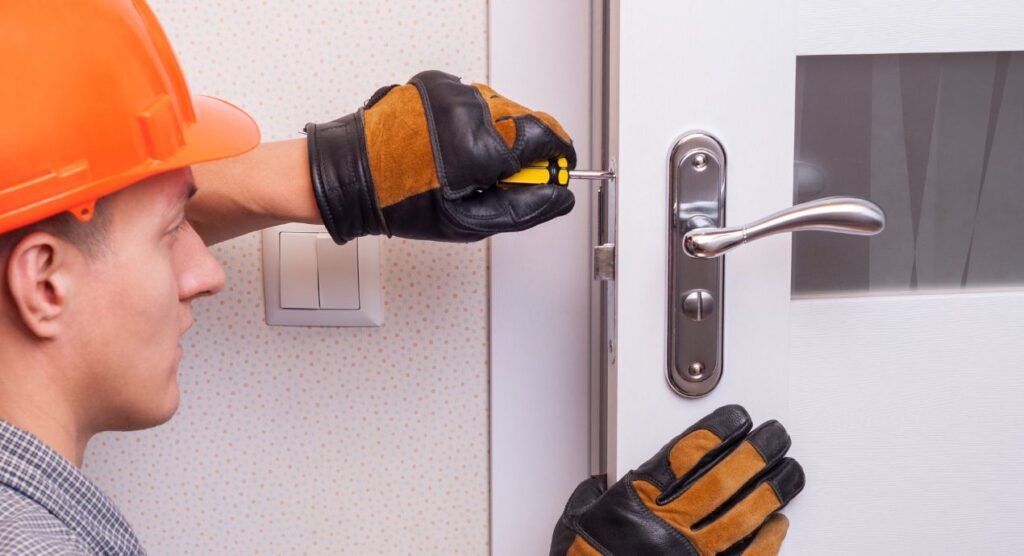
This is the single most important thing you can do, and it should happen before or on move-in day. Rekeying means a locksmith changes the internal pins of your existing locks so old keys no longer work — it’s faster and cheaper than full lock replacement, and just as effective for security purposes.
Don’t assume the previous owner “probably” collected all the keys. Between real estate agents, cleaners, contractors, and old roommates, there’s almost always a key floating around somewhere you can’t account for. A same-day rekey from a licensed locksmith closes that gap completely.
Step 2: Inspect Every Door for Weak Points
While you’re at it, take a hard look at your doors themselves, not just the locks:
- Check for solid construction. Hollow-core doors on exterior entries are easy to kick in. Solid wood or metal doors are far more resistant to forced entry.
- Upgrade to a Grade 1 or Grade 2 deadbolt. Look for a bolt throw of at least 1 inch — anything shorter is easier to pry.
- Reinforce the strike plate. A flimsy strike plate with short screws is one of the most common reasons doors fail during break-in attempts. Swapping in a reinforced plate with 3-inch screws that reach the door frame stud makes a real difference.
- Add a door viewer (peephole) if one isn’t already installed, especially for homes without a sidelight window near the entry.
Step 3: Don’t Forget Windows and Sliding Doors
Doors get most of the attention, but windows and sliding glass doors are common entry points too:
- Confirm every window lock functions properly — older homes especially can have painted-over or rusted window latches.
- Add a secondary lock or window pin to sliding glass doors and ground-floor windows.
- Consider a dowel or security bar in sliding door tracks as a low-cost backup.
Step 4: Secure the Garage and Any Outbuildings
Garages are frequently overlooked, but they often provide direct interior access to the home. Rekey the garage entry door along with the rest of the house, make sure the garage door opener has rolling-code technology (older models can be more vulnerable to signal cloning), and don’t leave the garage remote in a car parked in the driveway.
Sheds, gates, and any outbuildings with their own locks should be rekeyed or replaced as well — don’t let one overlooked lock undo the rest of your work.
Step 5: Upgrade to Smart Locks (If It Fits Your Lifestyle)
Smart locks have become a popular addition for new homeowners because they solve the “who has a key” problem going forward. Benefits include:
- Keyless entry via code, app, or fingerprint
- The ability to issue and revoke digital access instantly for family, dog walkers, or contractors
- Activity logs showing exactly when doors were locked or unlocked
- No more re-keying every time someone loses a key
If you’re weighing traditional rekeying against a full smart lock upgrade, our team can walk you through the smart lock installation options available for your specific doors.
Step 6: Light Up the Exterior
Burglars rely on darkness and cover. A well-lit property is one of the simplest, most effective deterrents available:
- Install motion-sensor lighting at all entry points, including side and back doors
- Light up the driveway and any dark side yards
- Trim back shrubs and trees near windows and doors that could provide hiding spots
Step 7: Rethink How You Handle Spare Keys
Skip the classic “key under the mat” or “fake rock” — burglars check those spots first, every time. Instead:
- Leave a spare key with a trusted neighbor or family member
- Use a lockbox with a rotating code if you need contractor or guest access
- If you go the smart lock route, temporary digital codes eliminate the need for hidden physical keys entirely
Step 8: Reset Every Digital Access Point Too
Physical locks aren’t the only thing that needs a reset. If the home came with an existing alarm system, garage keypad, or Wi-Fi-enabled security devices, change every code and password immediately — don’t assume the previous owner deactivated their access.
Step 9: Get to Know Your Neighbors
A strong neighborhood network is one of the most underrated security tools available. Knoxville Police Department regularly encourages residents to look out for one another, share concerns about suspicious activity, and keep an eye on each other’s homes during travel. A quick introduction to the neighbors on either side of you can pay off the first time you’re out of town.
Step 10: Do a Full Walkthrough Security Assessment
Once the big items are handled, walk your entire property like a burglar would. Check every entry point, test every lock, confirm your house number is visible from the street for emergency responders, and make sure any security cameras have full coverage of doors and driveways. Local departments, including KPD, offer free home security surveys for residents — a great follow-up step once your locks and lighting are in place.
Frequently Asked Questions
Should I rekey or fully replace my locks after moving?
For most homeowners, rekeying is sufficient and more cost-effective — it renders old keys useless without replacing the hardware. Full replacement is worth considering only if the existing locks are damaged, outdated, or you want to upgrade to a higher security grade or smart lock.
How soon after moving in should I change the locks?
Ideally, before you move your belongings in, or within the first 24–48 hours at the latest. This closes the security gap as early as possible.
Is it expensive to rekey a house?
Rekeying is significantly less expensive than replacing locks entirely, since it reuses your existing hardware. Pricing depends on the number of doors and lock types — contact Keyhub Locksmith for a same-day quote in the Knoxville area.
Do I need to rekey interior doors too?
Generally no — the priority is every exterior entry point: front door, back door, garage entry, and any sliding or side doors. Interior doors are a lower priority unless you have specific privacy needs.
What’s the difference between rekeying and changing locks?
Rekeying alters the internal pin configuration of an existing lock so old keys stop working, while changing locks means installing entirely new hardware. Rekeying is faster and cheaper; replacement is better if you want new features like smart access.
Get Your New Home Secured the Right Way
Moving into a new house in Knoxville should feel exciting, not uncertain. Keyhub Locksmith offers same-day rekeying, lock replacement, and smart lock installation for new homeowners across Knoxville, TN and the surrounding areas. Our licensed locksmiths can secure your entire home in a single visit — often before your moving truck even leaves the driveway.
Check out our full list of locksmith services or explore our residential rekeying options. Ready to get started? Schedule your move-in security visit with Keyhub Locksmith today.